

Journal · Weddings
Every New York Wedding Has a Different Skyline Behind It
Your wedding photos will outlive the flowers, the seating chart, and probably the shoes you swore were comfortable. In a city like New York, they deserve a backdrop worth remembering too.
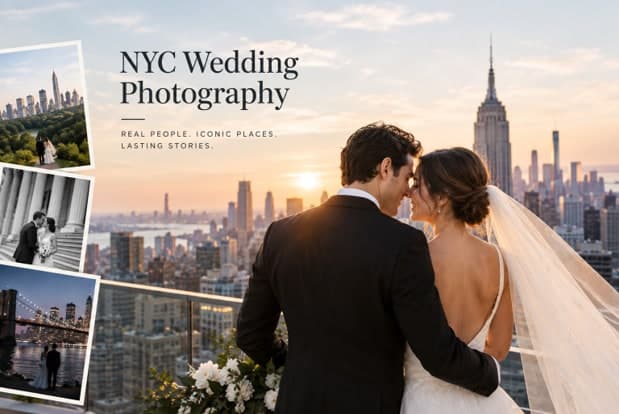
Finding a NYC wedding photographer who actually understands the city is harder than it sounds. Anyone can point a camera at the skyline. Fewer people know how to read a room, catch a glance before it disappears, and still get you out the door on time for your reception.
Why New York City Changes Everything About Wedding Photography
New York does not offer one backdrop. It offers dozens, sometimes in the same afternoon. A couple might get ready in a hotel suite overlooking Central Park, say their vows inside a marble-columned landmark, and end the night on a rooftop with the skyline glowing behind them.
That range is exactly what makes New York wedding photography so different from anywhere else. A photographer who only knows how to shoot in a studio or a single go-to garden will struggle here. The city rewards people who know its light, its crowds, its quiet corners, and its rhythms well enough to plan around them instead of getting caught off guard.
Some of the settings that come up again and again in New York weddings include Central Park for open, natural portraits, the West Village for its townhouses and tree cover, and Hudson River Park for a calmer, waterfront feel further from the crowds. These are not just pretty backdrops picked at random.
Each one shapes the mood of your portraits, from bright and airy to quiet and intimate, and choosing between them is part of building your day together with your photographer from the start.
Film or Digital? Both Have a Real Place in Your Wedding
Couples often assume this is a style preference with no real substance behind it. It is not. Film and digital produce genuinely different results, and the right pick depends on what you care about most.
| What You're Weighing | Film | Digital |
|---|---|---|
| Look and feel | Soft, warm, closer to a family heirloom | Crisp, bright, immediately shareable |
| How fast you get your photos | Slower, since film needs processing | Much quicker turnaround |
| Editing after the fact | Limited once the shutter clicks | Wide room for color and retouching |
| Typical equipment | Hasselblad, Contax 645, Leica M6 | Standard digital wedding bodies |
| Cost | Usually runs higher | Generally the more affordable route |
Digital wins on speed and flexibility, which matters if you want your gallery back within days rather than weeks.
A growing number of couples choose to do both, leaning on film coverage for portraits and digital for the parts of the day that move fast, like the reception.
Love Looks Different for Every Couple, and Your Photos Should Reflect That
LGBTQIA+ weddings often carry weight that goes beyond the ceremony itself, tied to family acceptance, years of waiting, or the simple fact that this kind of celebration was not always legally possible.
A photographer walking into that day needs to bring more than technical skill. They need to actually see the couple in front of them, without leaning on assumptions borrowed from a more traditional ceremony.
Coverage built around LGBTQIA+ celebrations works best when it starts from that understanding, treating every couple as a genuine creative partner in telling their own story.
City Hall Weddings Ask for a Completely Different Skill Set
Not everyone wants three hundred guests and a six-hour reception. City Hall weddings have grown popular precisely because they strip things down to what matters. But photographing one is not simpler than photographing a ballroom wedding. It is just different.
Spaces like the Marriage Bureau or the courthouse staircase are tight, often shared with several other couples on the same afternoon, and moving fast whether you are ready or not. A NYC wedding photographer who knows how to work quietly and quickly in that environment will get you images that feel intimate rather than rushed.
Many couples follow the ceremony with a short walk to a nearby park for portraits, stretching a fifteen-minute ceremony into a full visual story.
Your Wedding Day Is Only One Chapter
A wedding rarely starts on the wedding day. It usually starts with a proposal, moves through an engagement session, and picks up again at a rehearsal dinner before the main event. Staying with the same photographer through all of it builds a kind of shorthand between you and them, and that comfort tends to show up in the photos.
Gruber Photographers has documented more than 950 secret proposals across New York, and a good number of those couples return for their wedding coverage later, largely because that early partnership already exists.
It is worth exploring, from the very beginning, whether a secret proposal or engagement session can grow into one continuous relationship rather than a series of separate bookings.
Should You Bring a Cinematographer Into the Mix?
Photos freeze a moment. Video keeps it moving. If it fits your plans, having someone capture footage alongside stills means you can hear your own vows again, not just see them, and relive the exact energy of your first dance instead of reconstructing it from memory.
It is not essential for every couple, and plenty of weddings are documented beautifully with photography alone. But if sound and motion matter to you, it is worth talking through cinematic coverage with your photography team early, before the rest of your day is locked in.
What If You're Not Getting Married in New York at All?
Some couples base their planning in New York and then get married somewhere else entirely, whether that is the Hamptons, Tuscany, or a beach in the Caribbean. Traveling for a wedding asks a NYC wedding photographer to adapt fast: different light, different customs, different logistics on a schedule they don't fully control.
A team with real destination wedding experience should be able to speak specifically to places they've actually worked before, not just agree to go anywhere in general terms.
Matching the Right Approach to Your Wedding
There is no single "best" answer here, only the answer that fits your day. If you want portraits that feel timeless years from now, lean toward film. If speed and easy sharing matter more, digital covers that better.
If you're planning something small and unscripted, look for someone specifically comfortable with City Hall settings. And if your celebration is happening outside New York altogether, talk through travel experience together before anything else gets decided.
A Few Honest Questions Couples Usually Ask
Spring and fall weekends in New York fill up fast, sometimes a year out for the most requested dates, so starting that conversation early gives you more room to work with who you actually want.
No, but it tends to help. Couples who've done one before often say it made them noticeably more relaxed once the actual wedding day camera came out.
Yes, and it's fairly common. Many couples use film for portraits and slower, quieter moments, then switch to digital for the parts of the day that move too fast for film to keep up with.
Bringing It All Together
Picking a NYC wedding photographer really comes down to knowing what you want your photos to feel like years from now, not just how they look the week after the wedding.
Whether that means the warmth of film, the speed of digital, or someone who's spent real time inside courthouses and unconventional venues, the fit matters more than the portfolio alone.
Gruber Photographers has spent decades building partnerships with couples across New York's most iconic and least expected corners, walking alongside them from the first proposal photo to the very last dance.